Table Of Content

American Craftsman is an American domestic architectural style, inspired by the Arts and Crafts movement, which included interior design, landscape design, applied arts, and decorative arts, beginning in the last years of the 19th century. Its immediate ancestors in American architecture are the Shingle style, which began the move away from Victorian ornamentation toward simpler forms, and the Prairie style of Frank Lloyd Wright. This Craftsman bungalow's broad proportions, overhanging eaves, and exposed brackets are typical of Arts and Crafts construction. Roof designs are generally either single- or double-pitched on Craftsman-style homes. It's also common for the roof to stretch past the exterior walls, resulting in deep eaves that offer shade along the side of the house or form a covered front porch.
This Pasadena Craftsman Featured in ‘Back to the Future’ Gets a Fresh Update - Sunset
This Pasadena Craftsman Featured in ‘Back to the Future’ Gets a Fresh Update.
Posted: Wed, 02 Aug 2023 07:00:00 GMT [source]
"Tiny homes are not the big solution to homelessness that we need"
It was so important that even though the home's previous owners had enclosed it, the current owners spent two months restoring it and shoring it up (via Old House Online). Even if you don’t live in a true Craftsman house, chances are, your living space still has those elements that make this style timeless—everything from the breakfast nook to gorgeous built-in shelves (even if you painted the wood a moody hue). One difference between the Craftsman-style home and a Prairie-style home is that the overhanging eaves are much wider and hip roofs are more likely than gables.
Design
A bungalow is a small house that, traditionally, is only one story high, though today it’s common to find ones whose attic space has been converted into a second-story bedroom. Bungalows are raised from the sidewalk with a short flight of steps and feature small verandas, overhanging eaves, and dormer windows. Inside, bungalows use their small space efficiently, with tight, compact closets, built-in cabinets, and shelving. A furniture maker named Gustav Stickley popularized this style in the US through his publications in The Craftsman magazine.
Craftsman House: Everything You Need to Know
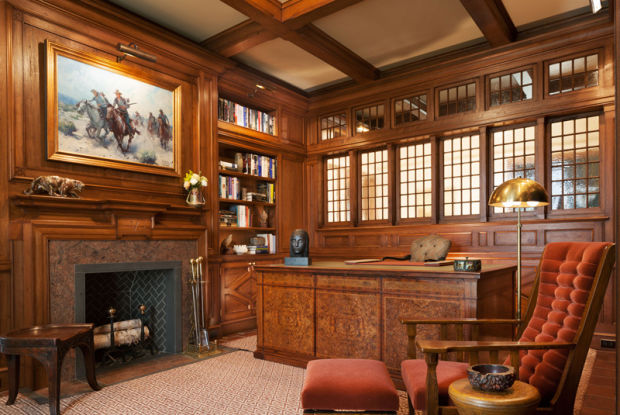
The Mission style combines elements of an Arts and Crafts home with historic Spanish architecture. The exterior of these homes feature white stucco, hand-painted tiles, quatrefoil windows, arched openings, exposed wood beams, and painted ironwork. The interior features of Arts and Crafts style houses reflect this design style’s simple and practical nature.
dMFK Architects restores CFA Voysey's Arts and Crafts factory to its "former glory"
Once upon a not-too-distant Art Basel Miami Beach, before the pandemic upended social gatherings, a creative crowd packed into the Shorecrest home of art dealer Nina Johnson and singer-songwriter Daniel Milewski. A short drive away, a show of Allen’s works on paper at Johnson’s namesake gallery offered a visual counterpoint to the tunes. All products featured on Architectural Digest are independently selected by our editors.
Architecture studio dMFK Architects has restored and renovated the Voysey House office in Chiswick, London, which was originally designed as a wallpaper factory by architect CFA Voysey. In Southern California, the Pasadena-based firm Greene and Greene was the most renowned practitioner of the original American Craftsman Style. Their projects for Ultimate bungalows include the Gamble House and Robert R. Blacker House in Pasadena, and the Thorsen House in Berkeley, California—with numerous others in California. Other examples in the Los Angeles region include the Arts and Crafts Lummis House by Theodore Eisen and Sumner P. Hunt, along the Arroyo Seco in Highland Park, California and the Journey House, located in Pasadena. This selection of unique Craftsman houses showcases rich character and timeless curb appeal.
Craftsman Front Porch
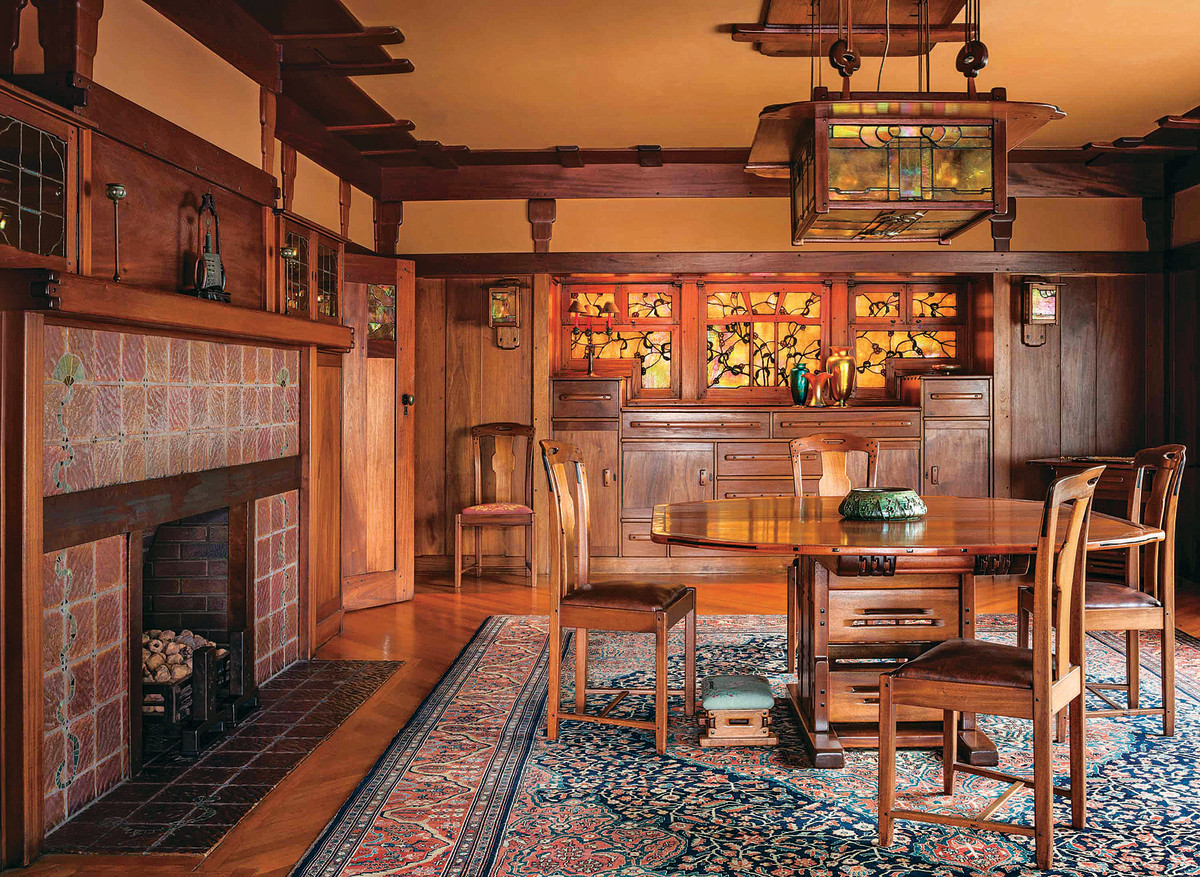
It’s just not the way we live.” So they landed in Elmwood, an old residential neighborhood just a twenty minute walk from the Dean’s Office at Berkeley, pretty close to their daughters’ school, and near a local BART station for easy access to San Francisco. The Prairie School architects of Chicago—including Purcell and Elmslie, George Maher, Walter Burley Griffin, and Marion Mahoney (only lately given her due as a designer)—developed and spread Frank Lloyd Wright’s message. Henry Trost’s work in El Paso and elsewhere reflected his training as a Prairie School architect, while in Kansas City, Louis Curtiss took a very different approach; his Mineral Hall may be America’s only true Art Nouveau house. As in England and Europe, natural building materials such as fine woods, stone, and brick were favored.
The Arts and Crafts-style home is one that inspired and directly led to many of the houses you'll spot across America today. Because the design is that of handcrafted simplicity, these homes rarely go out of style, even as design trends change throughout the years. Voysey was a British Arts and Crafts architect and designer who was awarded the RIBA Gold Medal in 1940. Voysey House stands as the only commercial building designed by the renowned architect. Recently, Voysey's Winsford Cottage Hospital in Devon was converted into a holiday home by Benjamin + Beauchamp Architects. The Arts and Crafts movement also created an architectural style still prevalent in the United States and England.
David and Mary Gamble lived in the house during the winter months until their deaths in 1923 and 1929, respectively. Cecil Huggins Gamble and his wife Louise Gibbs Gamble lived in the house beginning in 1946. They briefly considered selling it, until prospective buyers spoke of painting the interior woodwork white. In 1966, the Gamble family turned the house over to the city of Pasadena in a joint agreement with the University of Southern California (USC) School of Architecture. The Gamble House was declared a National Historic Landmark in 1977.[3][6] Today, two 5th-year USC architecture students live in the house full-time; the selected students change annually. There's one more important thing you don't have to do, and that is having to buy expensive, bespoke commissions to create an Arts and Crafts home.
Artists like William Morris became disenchanted with the effects of machinery and the uniform styles that artists produced. Instead, he advocated making goods people valued – not just producing them for production’s sake. The elements of Arts and Crafts homes have exterior characteristics that make them distinct from other home design styles. This small porch shows off the characteristic tapered square columns of Craftsman architecture.
“The elaborate detail of exterior rafter ends and brackets also drive up the costs of a true Craftsman home,” Yeley adds. It heralded a new approach in which architecture, furniture and adornments were all intended to sit in harmony. But these homes also celebrated the beauty of the outdoors in the American prairies. Architects designed Arts and Crafts homes to react to the overdecoration of Victorian homes, so this home style has a simpler and more rustic look.
Brick along the base of the porch and an overhead lantern add interest to the facade. Color-coordinated containers beckon visitors onto the porch of this Arts and Crafts home. Spring-green ceramic spheres match the containers to provide a unifying effect. The traditional Craftsman front door showcases multi-pane windows and an earthy stain that offers a warm welcome from the street. Call it a meeting of the minds—eccentric, design-obsessed, and slightly demented minds. The story begins at a Los Angeles gym, where entrepreneur Yoram Heller and architect Andre Herrero struck up what can only be described as a bromance.
Charmingly restrained room layouts by luminaries such as Will Bradley conveyed Arts & Crafts values to millions of readers. In Europe, the Arts & Crafts movement flourished in several distinctively regional subsets, particularly Austria’s Secession Movement, Germany’s Jugendstil, and France’s Art Nouveau. All turned away from mass production and toward hand craftsmanship for both buildings and objects. In architecture, Morris and his followers advocated the examples of Gothic church architecture and English vernacular house styles.
That’s understandable, considering that the aesthetic’s emphasis on detailed millwork, picture windows, and fireplaces continues to feel impressive yet cozy. Below, we’ve chosen a series of our favorite Craftsman homes to be featured by AD. The woods, the low and horizontal room shapes, and the natural light that filters through the art glass exterior windows coexist with a relatively traditional plan, in which most rooms are regularly shaped and organized around a central hall. Although the house is not as spatially adventurous as the contemporary works of Frank Lloyd Wright, or even of the earlier New England "Shingle style," its mood is casual and its symmetries tend to be localized. One good example of this is a recent addition to the Arts and Crafts movement founder William Morris' home.
Prominent eastern architects included William L. Price, Aymar Embury, Wilson Eyre, and Joy Wheeler Dow. The house is located on a grassy knoll overlooking Pasadena's Arroyo Seco, a broad, seasonally dry river bed. Because of the Gambles’ attraction to the environment, the Greenes designed the house to complement the rustic setting. The house's design reflected the Gambles' love of nature as flowers and trees were brought to the interior—creating pictures in wood, metal, art glass, and semi-precious stone. It's easy to make too much of the differences, but the truth is that Arts and Crafts interior design is a continuum, with huge amounts of variation from home to home, country to country, and architect to architect. Still, they can have a substantially similar feel inside, created by the built-in shelving and furniture; natural and nature-inspired materials, colors, patterns and design elements; and largely undecorated (and usually dark) wood.
Bungalows have wide-pitched roofs with dormers, allowing for ample attic space. This historic home style also features built-in options like bookcases and window seats to make the most use of available space. There is also a revitalized interest in Arts and Craft design ideas in interior design and architecture as evidenced by the cottagecore movement.


No comments:
Post a Comment